The carbon footprint and energy-efficient production processes are increasingly coming into focus in electronics manufacturing. Smart solutions and holistic approaches demonstrate that energy-saving measures also yield beneficial synergies for the production process itself.
In addition to rising energy costs, the reasons for this include the funding opportunities available to companies for reducing CO2 emissions and investing in more energy-efficient systems. It is advisable to carefully examine which national support measures apply to modernization projects involving more energy-efficient equipment and, where appropriate, to utilize European-level funding programs such as Horizon Europe, InvestEU, or the EEEF (European Energy Efficiency Fund).
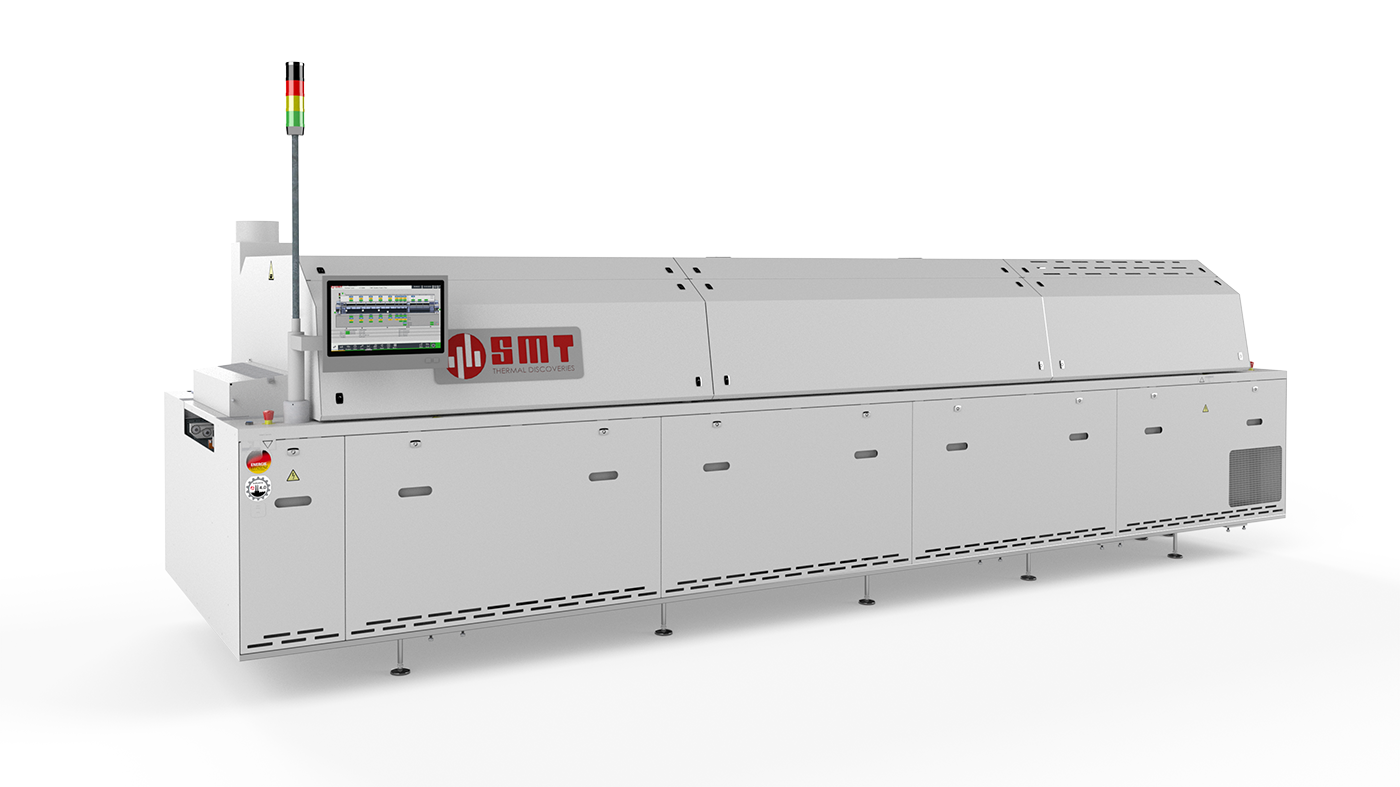
R-Series Reflow System – R360
SMART Solutions
SMT Thermal Discoveries, a Wertheim-based manufacturer of soldering systems and heat treatment machinery, has long focused specifically on energy efficiency in the soldering process. The company continuously fine-tunes the relevant parameters—addressing not only the obvious areas but also those where potential improvements might be less apparent.
Heating up a soldering system—regardless of the manufacturer—is invariably the most energy-intensive phase of the process. However, once the reflow system is operational, energy consumption levels can vary significantly. SMT Thermal Discoveries offers insights into the areas where substantial energy-saving potential was identified and the corresponding measures that were implemented.
Optimization of insulation
What applies to houses and infrastructure projects also applies to energy-intensive industrial plants. Improved insulation can significantly reduce heat loss to the outside. For example, a reflow soldering system with a heating zone length of 3.6 m can save an average of up to 1 kWh of energy consumption.
Optimization of heat transfer
Once a soldering system has reached the desired profile temperature, the majority of the energy subsequently required for the heat transfer process is consumed by the product itself. By optimizing fan speeds and fan output—using fewer heating zones overall than is typical for systems on the market, in the case of SMT Thermal Discoveries—significant amounts of mechanical energy can be saved. A reduction in fan frequency of 6 Hz alone lowers energy consumption in the fan section by approximately 20% (based on the example of an R360 reflow system with a heating zone length of 3.6 m). Precise control of heat transfer via fan output can be achieved within just a few seconds.
SMART Solutions – A Game-Changer in the Production Process
Maximum efficiency in a reflow system is achieved when the unit is heated up (having reached the target profile temperature) and operated continuously. To avoid changeover times—and the inevitable energy losses associated with them—the latest generation of SMT Thermal Discoveries systems features "Profiling Plus." This solution guarantees continuous operation using a single temperature setting, regardless of the product being processed. Consequently, every product can pass through the production line at a constant temperature. This solution opens up new possibilities for planning and flexibility, even for manufacturers whose production lines do not handle extremely high volumes. The user's heaviest product serves as the reference point for the temperature setting.
This principle ensures the lowest possible energy consumption per product, as changeover times (involving reheating or cooling) are eliminated—a factor that significantly impacts energy usage. The newly implemented profile prediction software serves as an additional tool for saving energy. Users enter the basic specifications of the product to be manufactured into the system and receive a pre-calculated soldering profile as a recommendation. This profile can be customized based on priorities such as throughput times and temperature, or configured specifically as the "most energy-efficient profile" for the product in question.
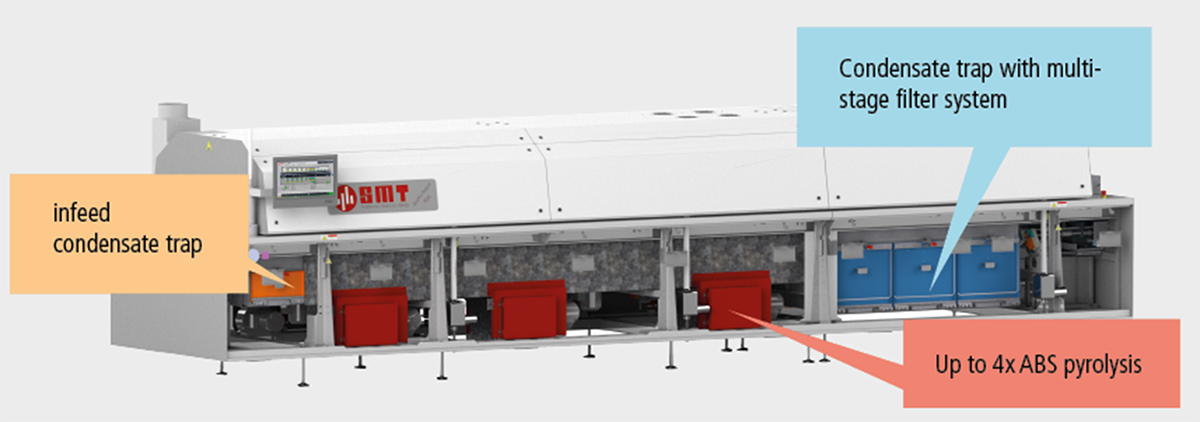
Process gas purification (catalysis and ABS pyrolysis) complements standard filter systems.
An optimized cleaning system
No user likes opening up a "black box" reflow soldering system, as this typically entails maintenance and/or cleaning tasks—and consequently, downtime. To minimize this, reflow systems from SMT Thermal Discoveries employ a process gas cleaning principle. Heated air from the soldering process is utilized for the cleaning process, and vice versa. Within the soldering unit, the process gas cleaning system draws in already heated air "on the spot"—meaning at critical locations and via short flow paths—heats it further, passes it through a catalyst at temperatures of up to 500°C, and then returns it to the oven at a regulated temperature. The large surface area of the precious-metal-coated catalyst (granulate) ensures optimal cleaning performance.
Definition: Catalysis refers to the alteration of a chemical reaction's kinetics through the use of a catalyst. This kinetic change enables or accelerates chemical reactions, such as the splitting or oxidation of long hydrocarbon chains. This process also occurs in a car's catalytic converter, where the internal combustion engine's exhaust gases are largely purified. The catalyst in a reflow system operates in a similar manner to the exhaust after-treatment system in a vehicle. Long-chain hydrocarbons released within the oven during the reflow process condense on cooler parts of the equipment, leading to the formation of resinous and oily residues.
Independent review
Whether for cars, refrigerators, or soldering systems, manufacturer-stated consumption figures are often opaque due to specific "in-house test conditions." To provide users with precise and reliable consumption data, SMT Thermal Discoveries subjected its equipment to independent external testing by TÜV Süd. The systems tested were an R360 reflow system with a heating zone length of 3.6 meters and a Vac L vacuum reflow system.
Tested system R360 – Energy consumption value: Idle = 7.994 kW
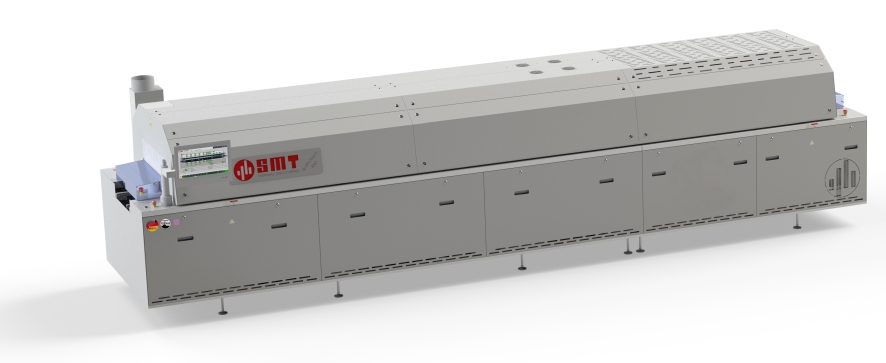
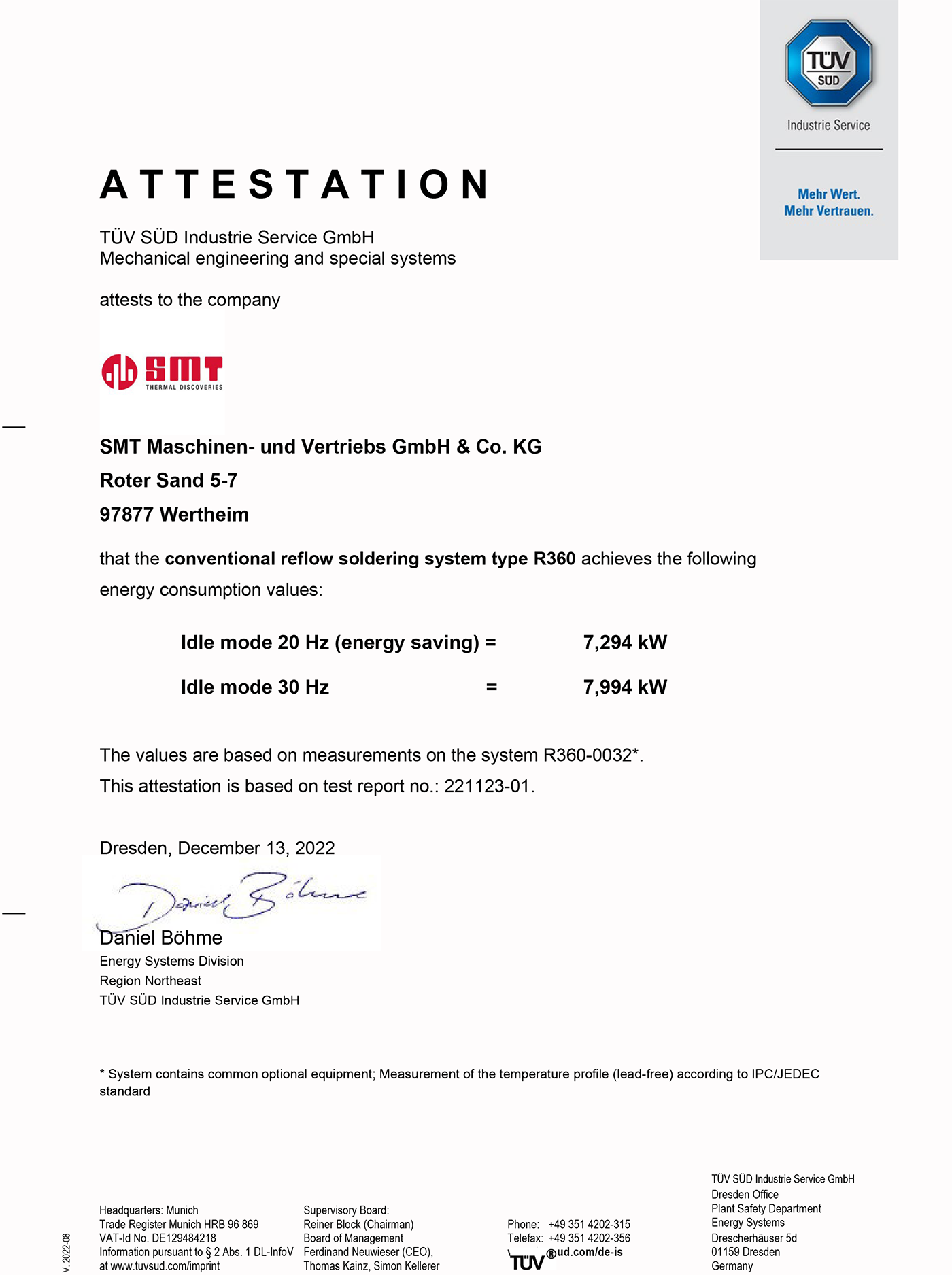
R360 Certificate and Test Report
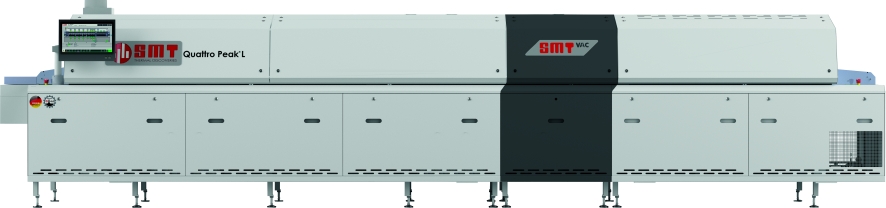
Tested system VacL – Energy consumption value: Idling = 13.929 kW
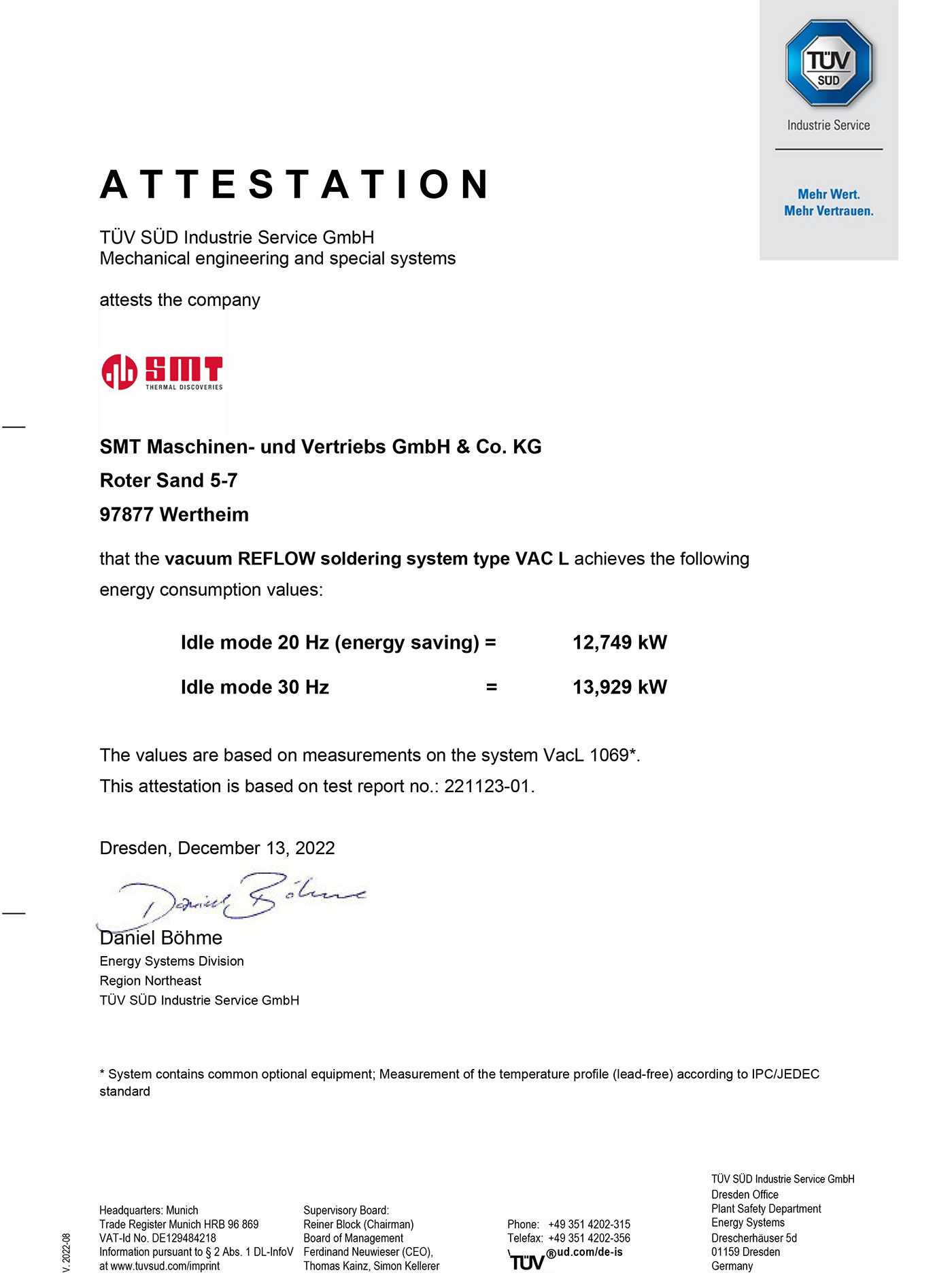
VacL Certificate and Test Report
Quality & Longevity / Sustainability
Longevity and quality are well-known prerequisites for optimizing efficiency and reducing one's carbon footprint. A high-quality soldering system can be expected to remain in production use for up to 20 years, provided that appropriate maintenance intervals are observed. Since the system's carbon footprint—which originates during the machine's manufacture—is a key factor for many users, SMT Thermal Discoveries consistently relies on 100% "Made in Germany" quality and German manufacturing—thereby ensuring short supply chains for production and material procurement.
You can also find this article (German only) at
Developments - Innovations & Events with SMT Wertheim